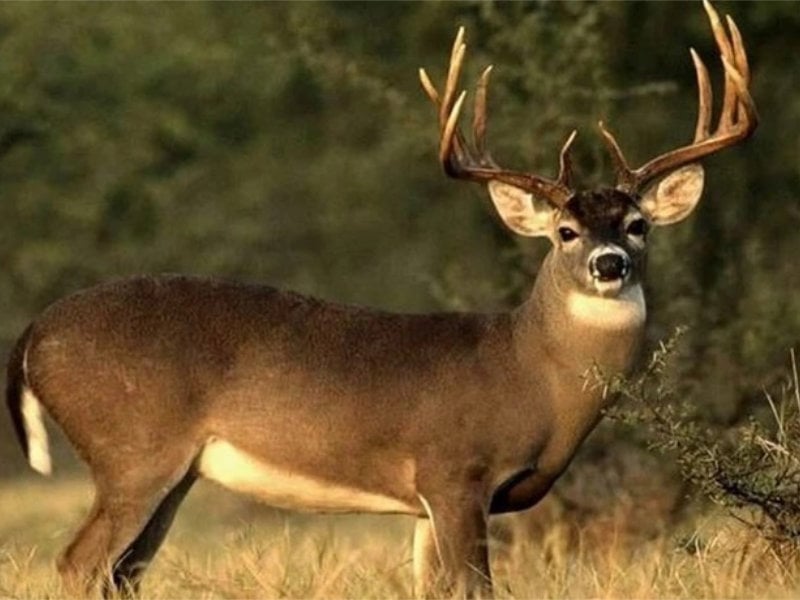
If you are searching for deer hunting property in Missouri, county harvest totals can help you decide where to begin. However, the county with the largest harvest is not automatically the best location for every buyer.
The Missouri Department of Conservation reported that Franklin, Howell, Callaway, Jefferson, and Texas counties produced the five highest total deer harvests during the 2025-2026 season. Together, these counties represent several very different hunting-property markets, from agricultural and timber combinations to rugged Ozark acreage and bowhunting properties near more populated areas.
The right county depends on how you hunt, how much land you want, how far you are willing to travel, and whether you want income, seclusion, improvements, or future building potential.
What Missouri’s Latest Deer Harvest Data Shows
According to the Missouri Department of Conservation’s 2025-2026 Deer Harvest Summary, these five counties led the state in total reported harvest:
| County | Antlered Bucks | Total Harvest | Notable Result |
|---|---|---|---|
| Franklin | 3,185 | 6,751 | First in total and firearms harvest |
| Howell | 2,458 | 5,474 | Second in total and firearms harvest |
| Callaway | 2,360 | 5,197 | Strong firearms and archery results |
| Jefferson | 2,440 | 5,173 | First in statewide archery harvest |
| Texas | 2,475 | 4,974 | Third in firearms harvest |
These totals confirm that all five counties support substantial deer hunting activity. They do not tell you how much hunting pressure exists, how many acres were available to hunters, the age structure of the deer herd, or whether a particular property has the habitat necessary to hold deer.
Use county harvest data to narrow your search, then evaluate the individual property.
Franklin County: Strong Results Across Multiple Seasons
Franklin County produced Missouri’s highest overall deer harvest, with 6,751 reported deer. It also led the state in firearms harvest and ranked second in archery harvest.
That combination makes Franklin County worth considering for buyers who want flexibility. A properly configured property may support archery hunting, firearms hunting, habitat management, recreation, and potential residential use.
Franklin County is also more populated than the other primarily rural counties on this list. The U.S. Census Bureau reports approximately 113.5 residents per square mile. That makes surrounding development and neighboring land use especially important.
What to examine on a Franklin County property
- The number and location of neighboring homes
- Safe shooting directions and usable firearms setups
- Road noise and development along property boundaries
- Timber corridors connecting neighboring tracts
- Bedding cover away from roads and houses
- Field edges, creek bottoms, draws, and natural funnels
- Local restrictions affecting hunting, shooting, or improvements
- The likelihood of future development near the property
A Franklin County parcel can produce excellent hunting, but buyers should not assume that every wooded tract provides enough security cover or separation from neighboring activity.
Howell County: Ozark Timber, Terrain, and Firearms Hunting
Howell County recorded 5,474 deer during the 2025-2026 season. It ranked second in Missouri for both total harvest and firearms harvest.
This is a different type of market from Franklin or Jefferson counties. Howell County is part of the Missouri Ozarks, where buyers commonly encounter wooded ridges, hollows, pasture, creek systems, springs, and changes in elevation.
Missouri deer-management guidance notes that Ozark soils are generally less fertile than the deeper agricultural soils found in other portions of the state. Productive bottom ground and lower slopes can therefore be particularly important sources of nutrition. University of Missouri Extension recommends evaluating soil quality, surrounding land use, cover, food, water, and neighboring management when developing realistic deer-management goals.
What to examine on a Howell County property
- Ridges, benches, saddles, and draws that influence deer travel
- Areas where timber connects to pasture or open ground
- Oak and other mast-producing trees
- Young timber, brush, or understory that can provide bedding cover
- Springs, ponds, creeks, and seasonal water
- Road access during wet or winter conditions
- Steep ground that may be difficult to reach with equipment
- Soil quality in potential food-plot locations
- Locations where stands can be entered without crossing feeding or bedding areas
A large wooded tract can look impressive on an aerial image while providing limited ground-level forage. Buyers should inspect the understory and determine whether timber management, prescribed fire, or strategic openings could improve the habitat.
Callaway County: A Strong Mix for Archery, Firearms, and Land Management
Callaway County reported 5,197 deer. It ranked fourth in statewide firearms harvest and fourth in archery harvest.
This balanced performance makes Callaway County attractive to buyers who want multiple hunting options. Properties that combine crop ground, pasture, timbered draws, creek corridors, brush, and field edges can provide food, cover, travel routes, and potential agricultural income.
Callaway County can be especially appealing when a buyer wants hunting ground that still has a productive use outside deer season.
What to examine on a Callaway County property
- Connections between crop fields and larger blocks of cover
- Timbered draws that link feeding and bedding areas
- Creek crossings, fence gaps, and field corners
- Whether harvested crops leave dependable late-season food
- Existing farm leases and the farmer’s access rights
- CRP or other program acreage and contract requirements
- Floodplain or drainage issues near creek bottoms
- Locations for food plots that do not interfere with farm income
- Whether access routes allow hunters to avoid major deer-travel areas
The strongest property is not always the one with the most tillable acreage. A farm with productive fields but very little secure cover may feed deer primarily at night. Look for enough timber, brush, or neighboring cover to hold deer during daylight.
Jefferson County: Missouri’s Leading Archery County
Jefferson County produced 5,173 deer and led Missouri in archery harvest with 1,586 reported deer.
That archery result distinguishes Jefferson County from the more firearms-oriented counties on this list. It may be a strong choice for bowhunters who want property within reach of the St. Louis region.
Jefferson County is also substantially more populated. The U.S. Census Bureau reports approximately 345.4 residents per square mile. Texas County, by comparison, has approximately 20.8 residents per square mile.
Population density does not make a county unsuitable for hunting. It does mean that parcel shape, neighboring homes, roads, access, and local rules require closer attention.
What to examine on a Jefferson County property
- How many acres are actually huntable
- The distance between stand locations and neighboring houses
- Local firearm-discharge or hunting restrictions
- Narrow parcel sections that limit safe hunting
- Deer-travel corridors around subdivisions and roads
- Entry and exit routes for low-impact bowhunting
- Whether neighboring parcels also allow hunting
- Future development potential on adjoining land
- The ability to recover a deer without crossing property lines
A 40-acre property with a compact shape and secure interior cover may hunt better than a larger but narrow parcel surrounded by houses. In Jefferson County, usable layout may be more important than the advertised acreage.
Texas County: Rural Ozark Acreage and Strong Firearms Results
Texas County recorded 4,974 deer during the 2025-2026 season. It ranked third in statewide firearms harvest and second during the main November firearms portion.
Texas County is the largest county on this list by land area and the least densely populated. The U.S. Census Bureau reports approximately 20.8 residents per square mile.
That makes Texas County particularly relevant to buyers looking for larger tracts, privacy, timber, mixed pasture, or a more remote hunting experience.
What to examine on a Texas County property
- Year-round legal access to the property
- Condition and maintenance of private or gravel roads
- Interior trails for stands, equipment, and deer recovery
- Steepness and usability of the acreage
- Distance to electricity, water, and other utilities
- Timber composition and mast production
- Open ground suitable for food plots
- Springs, ponds, creeks, and seasonal water sources
- Distance from the property to lodging, fuel, processors, and supplies
- The cost of improving roads, trails, crossings, and cabin sites
Texas County may offer more seclusion, but remote acreage can require more time and money to maintain. Buyers should determine whether they want a turnkey hunting property or a tract they can improve over several years.
Harvest Totals Are a Starting Point, Not a Property Guarantee
County harvest numbers measure reported deer taken during a season. They do not measure:
- Deer harvested per huntable acre
- Hunter effort or hunting pressure
- Average age of harvested bucks
- Antler quality
- The number of deer living on a specific property
- The amount of secure bedding cover
- Neighboring harvest practices
- The effect of roads, houses, or future development
Texas County covers more than 1,177 square miles, while Jefferson County covers approximately 656 square miles. Raw county totals should therefore not be treated as an equal comparison of deer density or property quality.
A lower-harvest county can contain an exceptional property. A high-harvest county can contain parcels with limited habitat, poor access, or excessive pressure.
How to Compare Two Deer Hunting Properties
When two properties are located in productive counties, compare them using the following criteria.
1. Food throughout the year
Look beyond existing food plots. Evaluate crop ground, browse, mast-producing trees, native plants, field edges, and nearby agricultural land.
2. Secure bedding cover
Deer need areas where they can avoid regular human disturbance. Thick regeneration, brush, young timber, overgrown fields, and secluded slopes can provide more security than open mature timber.
3. Water
Identify ponds, springs, creeks, livestock water, and seasonal drainage. Confirm whether water is dependable during dry periods.
4. Huntable access
Determine whether you can reach stands without crossing feeding areas or exposing yourself to deer bedding nearby. Access should work with common wind directions.
5. Surrounding properties
Deer do not recognize property lines. Study at least the surrounding square mile for crop fields, timber, roads, houses, public land, hunting pressure, and major travel corridors.
6. Parcel shape
Compact parcels generally provide more interior space. Long, narrow properties can be difficult to hunt without approaching boundaries or disturbing neighboring land.
7. Income and carrying costs
Farm rent, timber, grazing, CRP payments, hunting leases, and other income may help offset taxes and maintenance. Verify all leases, contracts, and income claims before purchasing.
8. Improvement potential
A property that lacks one habitat component may still be an excellent purchase if that weakness can be corrected. Determine where you could add food plots, water, bedding cover, trails, access roads, or a small cabin.
Questions to Ask Before Making an Offer
Before purchasing Missouri deer hunting property, ask:
- Is there recorded legal access?
- Has the property been surveyed?
- Are the boundaries clearly marked?
- Are mineral and timber rights included?
- Are there existing farm, grazing, or hunting leases?
- What crops have been planted recently?
- Is any portion of the land enrolled in a government program?
- Where are the primary bedding and feeding areas?
- How is the property normally accessed during hunting season?
- What hunting pressure exists on neighboring land?
- Are there local shooting or hunting restrictions?
- Is any portion located in a floodplain?
- Are food plots permitted under current deer-health regulations?
- What would roads, utilities, ponds, or habitat improvements cost?
- Can harvested deer be recovered without crossing neighboring property?
Missouri’s deer regulations and CWD requirements can change. The state has rules concerning sampling, carcass disposal, and the use of feed or minerals in designated counties. Review the current Missouri deer regulations before making management plans.
Which Missouri County Is Right for You?
Each of these counties presents a different opportunity:
- Franklin County: Strong all-around harvest results with both firearms and archery potential
- Howell County: Ozark timber, terrain, and strong firearms-hunting activity
- Callaway County: Balanced archery and firearms performance with agricultural potential
- Jefferson County: Missouri’s leading archery harvest county, with parcel layout and neighboring development playing a major role
- Texas County: Rural, lower-density acreage with strong firearms results and opportunities for larger tracts
The county narrows the search. The individual property determines whether the purchase fits your hunting goals.
Let Us Help You Evaluate the Right Property
Tell Boyer Land Company what you want to hunt, how many acres you need, which counties interest you, and whether you prefer timber, crop ground, pasture, water, income, improvements, or a cabin site.
We can help you compare Missouri deer hunting properties based on the factors that matter in the field, not just the description in the listing.
Tell Us What You’re Looking For
You can also view available Missouri hunting properties or call (636) 295-1476.